They are entitled to make a reasonable profit and provide returns to their shareholders. But car insurance is mandatory and therefore there should be limits. Insurers should not be able to earn excessive profits at the expense of the rights of people who are injured in car accidents.
Industry Figures
When insurers present figures about profits, losses and returns on equity, it is important to understand how those numbers were calculated and what assumptions were used. Financial projections are just that — projections — and their figures are based on data created and controlled by the insurers. These numbers must be carefully and independently scrutinized. Otherwise, they must be viewed with caution and scepticism.
Marketplace Issues
Like investing, the insurance industry goes through cycles. There are strong years and weaker years. Investment returns, interest rates, claims costs and economic conditions can all affect an insurer’s financial results. A year of lower-than-anticipated profit — or even several years — should be considered in the context of the industry’s longer-term performance.
Industry Reporting
Insurers may focus heavily on periods when costs are rising or profits are under pressure. But the full picture matters.
Industry Reality
Years of strong profits and massive investment returns are the reality of the insurance industry. Weaker performance is the exception, not the rule.
What do the numbers say?
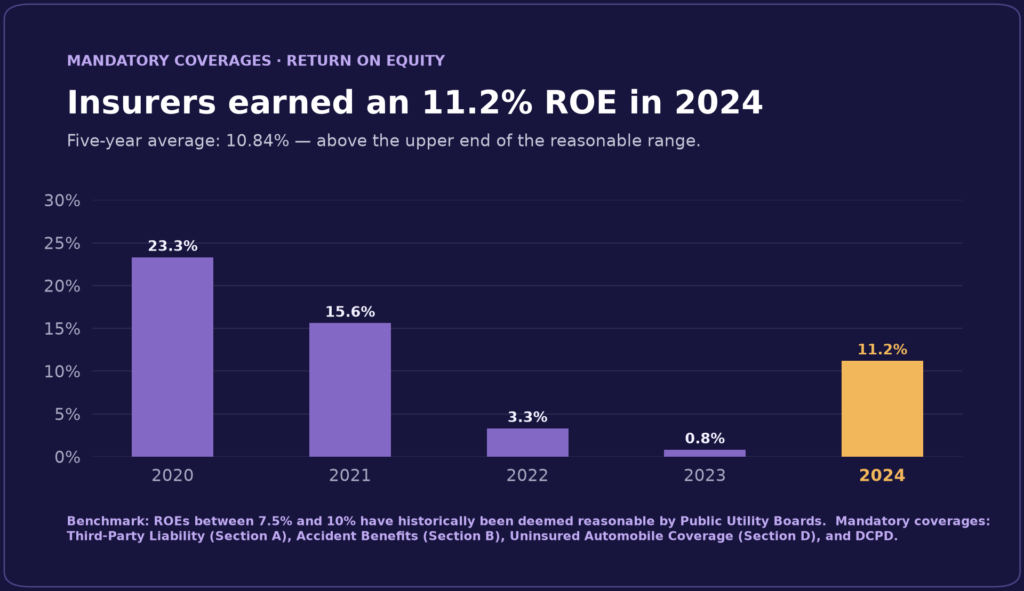
Mandatory Coverages — Return on Equity
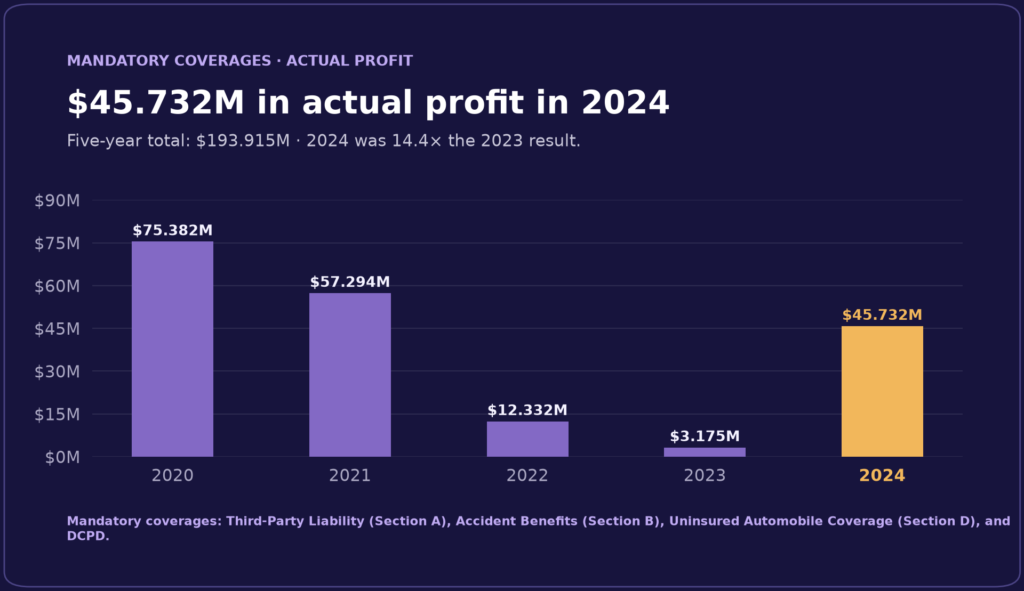
Mandatory Coverages — Actual Profit
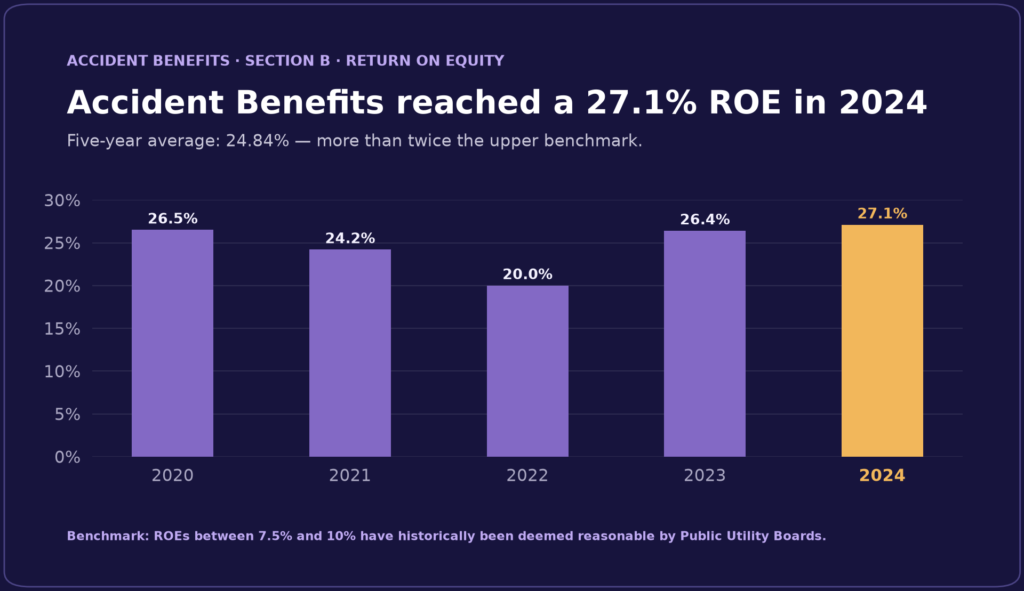
Accident Benefits (Section B) — Return on Equity
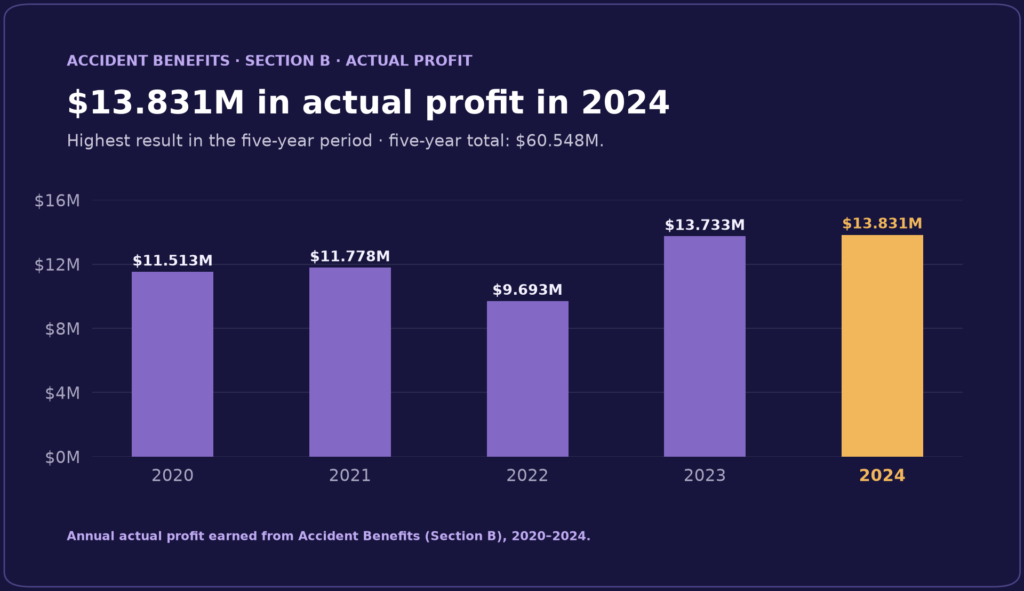
Accident Benefits (Section B) — Actual Profit
We believe that we can make change by working together